
Pregnancy
Prenatal Care at Options for Women St. Croix Valley
Options for Women St. Croix Valley offers free confidential prenatal services for anyone who chooses to carry a pregnancy to term. While insurance is required for labs, a 20 week fetal anatomy scan, and delivery at Hudson Hospital, all other services are free of charge. For more information call (651) 439-5964.
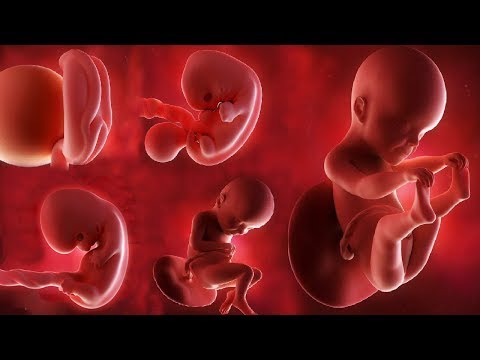
Fetal Development in Pregnancy
While the gestational age of the pregnancy is measured from the first day of your last menstrual period, it is important to keep in mind that fertilization actually occurs approximately two weeks after menstruation.
Fetal Development
Weeks 1 – 8
The brain and spinal cord begin to form and cardiac tissue starts to develop. Muscles of the eyes, nose, and mouth form and webbed fingers and toes poke out from the hands and feet that are developing. The lungs start to form the tubes that will carry air in and out after birth and the inner ear begins to develop.
Weeks 9 – 12
Cartilage for the limbs, hands, and feet start to form but won’t harden into bones yet. Eyelids form and remain closed. Genitals, liver, and fingernails begin to form. Kidneys begin making urine and pancreas starts making insulin.
Weeks 13 – 16
Long bones harden, skin is thin and see-through but begins to thicken. Toenails form. The neck is defined and lower limbs are developed. Hearing begins to develop and the lungs begin to form the tissue that exchanges oxygen and carbon dioxide after birth.
Weeks 17 – 20
The part of the brain that controls motor movements is fully formed and the digestive system is working. Ears, nose, and lips are recognizable on an ultrasound examination. The uterus and vagina are starting to form. Soft, downy hair covers the body.
Weeks 21 – 24
The pregnancy begins to kick and turn. The sucking reflex is developing. Fat is forming under the skin and ridges form in the hands and feet (the start of handprints and footprints). The skin is wrinkled and reddish from visible blood vessels.
Weeks 25 – 28
The lungs are fully formed but are not yet ready to function outside the uterus. The pregnancy responds to loud sounds by pulling in the arms and legs. Eyelids can open and close. Lungs begin to secrete surfactant which is necessary for breathing after birth. The nervous system continues developing and skin begins to look smoother as more fat is present.
Weeks 29 – 32
The pregnancy can stretch, kick, and make grasping motions. Eyes can sense changes in light. Bone marrow begins developing the red blood cells. Hair begins to form on the head. Testicles have begun to descend from the scrotum. Lanugo begins to disappear.
Weeks 33 – 36
Bones harden but the skull remains soft and flexible. Fingernails reach the ends of the fingers. Limbs begin to look chubby. The fetus may turn into a head down position for birth.
Weeks 37 – 40
The circulatory and musculoskeletal systems are done developing. The lungs, brain, and nervous system are complete. Fat continues to be added to keep the baby warm after birth.
Miscarriage
Also known as a spontaneous abortion, a miscarriage is a sudden loss of pregnancy that occurs before 20 weeks gestation. It is estimated that 20 % of pregnancies end in miscarriage and while some may occur with minimal to no symptoms, it is important to be aware of the symptoms that could occur. Miscarriages typically occur because of fetal chromosomal abnormalities. It is not the fault of the mother and most women who miscarry go on to experience full -term pregnancies later.
Risk Factors: 50% of all miscarriages are due to fetal chromosomal abnormalities; however, advanced maternal age and prior pregnancy loss can contribute. It is important to remember that miscarriage is not the fault of the mother
Symptoms: Vaginal bleeding, uterine cramping, lower back pain, fast heartbeat, passage of tissue or clot-like material through the uterus, and a sudden decrease in pregnancy symptoms.
Diagnosis: A thorough medical history, physical examination, ultrasound, and serum B-hCG testing all aid in diagnosing a miscarriage.
Treatment: Expectant management: giving the body time to pass the tissue on it’s own. Misoprostol: a medication that can be taken to help empty the uterus. Dilation and Curettage: a procedure that physically removes any tissue in the uterus commonly done if Misoprostol does not completely empty the uterus.
Ectopic Pregnancy
An ectopic pregnancy is a pregnancy that occurs outside of the uterus, most commonly in the fallopian tube. This pregnancy cannot progress normally and will require medical intervention as the growing tissue may cause life -threatening complications and bleeding.
Risk Factors: History of ectopic pregnancy, damaged fallopian tubes, ascending pelvic infection, prior pelvic or fallopian tube surgery, tubal factor infertility, history of infertility, and multiple embryo transfers, IUD in place during conception.
Symptoms: Sharp stabbing pain in the shoulder, neck, abdomen, or pelvis, heavy bleeding, extreme lightheadedness, fainting, and shock.
Diagnosis: Confirmation of pregnancy and a transvaginal ultrasound is the minimum required; however, serial evaluation with a transvaginal ultrasound or serum hCG level is often required to con firm the diagnosis.
Treatment: Methotrexate: a medication that can be given to treat ectopic pregnancy. It is important to follow up with your doctor. Laparoscopic surgery: used if you are experiencing symptoms of a ruptured ectopic pregnancy such as sharp pains and heavy bleeding.
References
American College of Obstetricians and Gynecologists’ Committee on Practice Bulletins—Gynecology. (2018, March). Acog Practice Bulletin No. 193: Tubal ectopic pregnancy. Obstetrics and gynecology. https://www.ncbi.nlm.nih.gov/pubmed/29470343
Early pregnancy loss. ACOG. (n.d.-a). https://www.acog.org/clinical/clinical-guidance/practice-bulletin/articles/2018/11/early-pregnancy-loss
How your fetus grows during pregnancy. ACOG. (2024). https://www.acog.org/womens-health/faqs/how-your-fetus-grows-during-pregnancy
Mayo Foundation for Medical Education and Research. (2023, September 8). Miscarriage. Mayo Clinic. https://www.mayoclinic.org/diseases-conditions/pregnancy-loss-miscarriage/symptoms-causes/syc-20354298
Mayo Foundation for Medical Education and Research. (n.d.). Ectopic pregnancy. Mayo Clinic. https://www.mayoclinic.org/diseases-conditions/ectopic-pregnancy/symptoms-causes/syc-20372088
What happens after a miscarriage? An Ob-GYN discusses the options. ACOG. (n.d.-b). https://www.acog.org/womens-health/experts-and-stories/the-latest/what-happens-after-a-miscarriage-an-ob-gyn-discusses-the-options
All of our services are provided at no cost. We serve residents in MN, WI, and beyond.